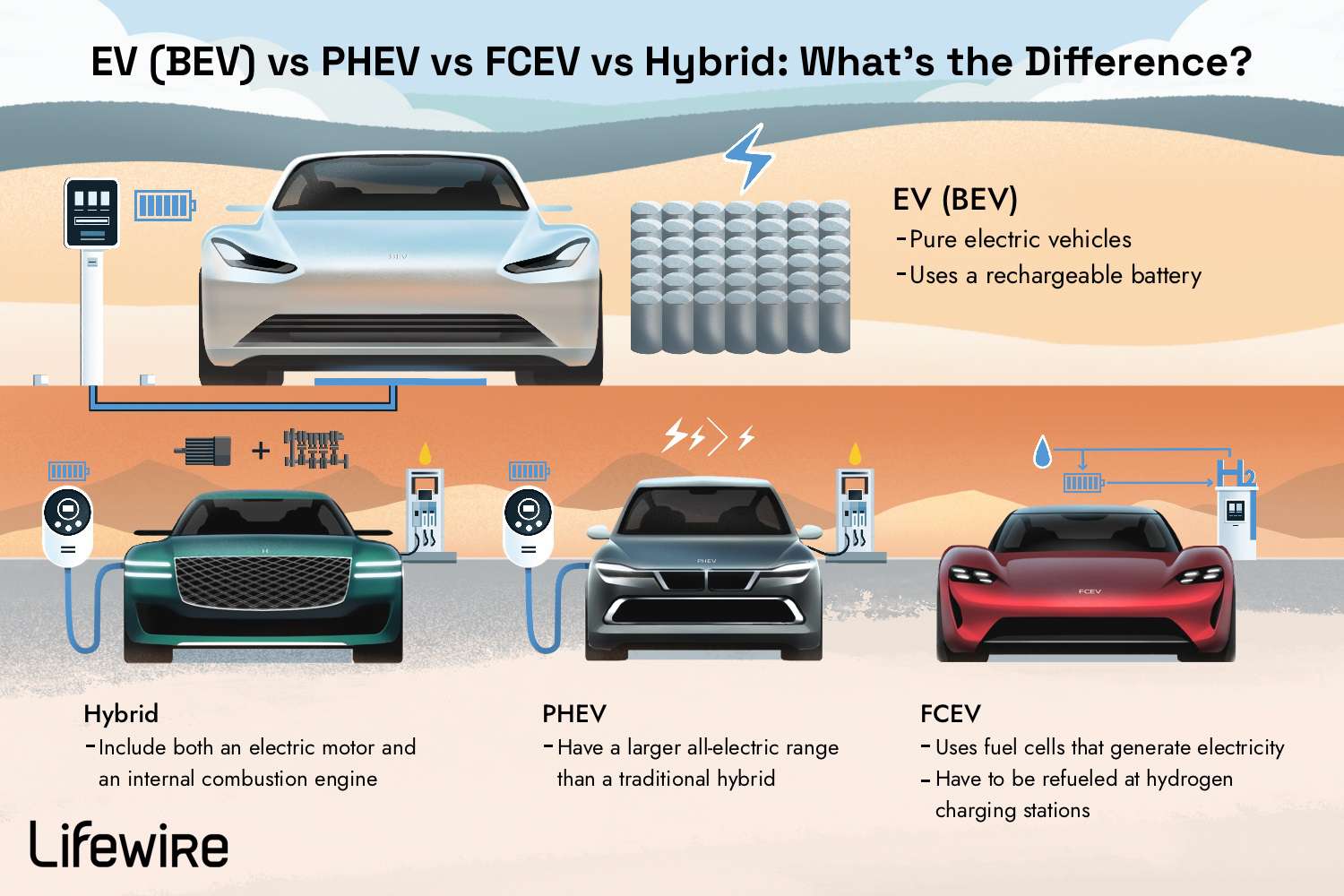
The global shift toward sustainable transportation has made electric vehicles (EVs) more popular than ever. However, when people hear the term electric car, it can actually refer to different types of vehicles that use electricity in various ways.
The three main types of electric vehicles are BEV (Battery Electric Vehicle), PHEV (Plug-in Hybrid Electric Vehicle), and HEV (Hybrid Electric Vehicle). Each type has unique features, benefits, and use cases.
In this blog, we’ll break down what each type means, how they work, their advantages, limitations, and which one might be right for you.
1. Battery Electric Vehicles (BEV)
What Is a BEV?
A Battery Electric Vehicle (BEV) runs entirely on electricity. It does not have an internal combustion engine (ICE) and produces zero tailpipe emissions.
BEVs store energy in large battery packs and use electric motors to drive the wheels.
How BEVs Work
- Energy is stored in a lithium-ion battery
- The battery powers an electric motor
- The vehicle is charged using:
- Home chargers (AC charging)
- Public fast chargers (DC fast charging)
- Home chargers (AC charging)
Examples of BEVs
- Tesla Model 3 / Model Y
- Tata Nexon EV
- Hyundai Kona Electric
- MG ZS EV
Advantages of BEVs
- ✅ Zero emissions
- ✅ Lowest running and maintenance cost
- ✅ Smooth, silent driving experience
- ✅ No fuel, oil changes, or exhaust systems
Limitations of BEVs
- ❌ Charging infrastructure still developing in some regions
- ❌ Higher upfront cost
- ❌ Limited driving range compared to fuel cars (though improving rapidly)
Best For
- Daily city commuters
- Environment-conscious buyers
- Users with access to home or workplace charging
2. Plug-in Hybrid Electric Vehicles (PHEV)
What Is a PHEV?
A Plug-in Hybrid Electric Vehicle (PHEV) uses both an electric motor and a petrol/diesel engine. It can be driven for short distances using electric power alone, and the engine takes over when the battery is depleted.
Unlike regular hybrids, PHEVs can be charged externally.
How PHEVs Work
- Drives in electric-only mode for 30–80 km (average)
- Switches to fuel engine for longer trips
- Battery can be charged via plug or regenerative braking
Examples of PHEVs
- Toyota Prius Prime
- BMW 330e
- Volvo XC60 Recharge
- Porsche Cayenne E-Hybrid
Advantages of PHEVs
- ✅ Electric driving for short trips
- ✅ No range anxiety
- ✅ Lower fuel consumption
- ✅ Flexibility of both fuel and electric power
Limitations of PHEVs
- ❌ More complex system (engine + motor)
- ❌ Higher maintenance than BEVs
- ❌ Still emits emissions when engine is used
Best For
- People who drive short distances daily but take long trips occasionally
- Users not ready to switch fully to electric
- Areas with limited charging infrastructure
3. Hybrid Electric Vehicles (HEV)
What Is an HEV?
A Hybrid Electric Vehicle (HEV) also combines an electric motor and a fuel engine, but cannot be plugged in. The battery is charged automatically through regenerative braking and the engine.
The electric motor assists the engine to improve fuel efficiency.
How HEVs Work
- Starts and drives at low speed on electric power
- Engine kicks in at higher speeds
- Battery recharges during braking and coasting
Examples of HEVs
- Toyota Prius
- Toyota Camry Hybrid
- Honda City Hybrid
- Toyota Hyryder Hybrid
Advantages of HEVs
- ✅ Excellent fuel efficiency
- ✅ No charging required
- ✅ Lower emissions than petrol/diesel cars
- ✅ Proven and reliable technology
Limitations of HEVs
- ❌ Cannot drive long distances on electric power alone
- ❌ Still dependent on fossil fuels
- ❌ Less savings compared to BEVs and PHEVs
Best For
- Users who want better mileage without charging
- Long-distance highway drivers
- Regions with no charging infrastructure
Comparison: BEV vs PHEV vs HEV
| Feature | BEV | PHEV | HEV |
| Fuel Engine | ❌ No | ✅ Yes | ✅ Yes |
| Plug-in Charging | ✅ Yes | ✅ Yes | ❌ No |
| Electric-Only Driving | ✅ Yes | ✅ Limited | ❌ Very limited |
| Emissions | Zero | Low | Lower than ICE |
| Running Cost | Lowest | Medium | Medium |
| Maintenance | Low | Medium | Medium |
Which Electric Vehicle Should You Choose?
- Choose BEV if you want zero emissions, low running costs, and primarily city driving.
- Choose PHEV if you want electric driving without worrying about long-distance charging.
- Choose HEV if you want better mileage without changing your driving or refueling habits.
The Future of Electric Vehicles
As battery technology improves and charging networks expand, BEVs are expected to dominate the future of mobility. Governments worldwide are offering incentives, subsidies, and infrastructure support to accelerate EV adoption.
Hybrid vehicles act as a transition technology, helping users move toward full electrification gradually.
Final Thoughts
Understanding the difference between BEV, PHEV, and HEV is essential before buying an electric vehicle. Each type serves a different purpose based on driving habits, budget, and charging availability.
Electric vehicles are not just a trend—they are the future of transportation.